Why Build a Glamping or Eco-Hospitality Business in Todos Santos, Baja California Sur
April 28, 2026
April 28, 2026
If you've been watching where serious hospitality investment is heading, the numbers are hard to ignore. The global glamping market was estimated at $3.79 billion in 2025 and is projected to reach $7.87 billion by 2033, growing at a compound annual rate of 9.5%.
And this growth isn't being carried by budget travelers — the luxury glamping segment commands higher price points and is positioned for significant growth as consumer demand for high-end amenities and personalized experiences continues to accelerate.
Between 2025 and 2030, the strongest growth across the entire hospitality sector will be driven by luxury glamping, eco-resorts, and distributed hotels — models that combine sustainability, design innovation, and technology to meet the demands of a new generation of high-spending travelers.
The Pacific corridor between Cabo San Lucas and La Paz is one of the few stretches of coastline in Mexico where the landscape, the cultural infrastructure, and the tourism demand are all in place — but the hospitality supply hasn't caught up yet. For an investor building in this category, that combination is exactly what you're looking for.
This is the first question any thoughtful buyer should ask, and it deserves a thorough answer.
Los Cabos is a mature resort market. Coastal land has largely been absorbed, and the hospitality scene is defined by international hotel brands operating at scale. There is limited room for a boutique or eco-concept to carve out a distinct position — the traveler who books Los Cabos is already choosing between the Waldorf Astoria and the One&Only, and that is not the guest a concept like this is built for.
Todos Santos and the surrounding Pacific Corridor attract a meaningfully different visitor. The town holds the Pueblo Mágico designation — a federal recognition awarded to Mexican towns of genuine historic, artistic, and cultural significance. It has a functioning arts district, independently owned restaurants with serious culinary reputations, consistent surf, and a resident community of architects, artists, and international professionals who chose it specifically because it operates outside the resort economy. That community, organically, becomes the best marketing any hospitality property here could ask for.
The Todos Santos–Cerritos–Pescadero corridor is now the most active growth corridor in Baja California Sur, powered by newly granted permits, improved water access, and rising interest from foreign and domestic buyers alike. The local ejido has begun releasing parcels for sale, opening up tracts of developable land that were previously off-limits to outside buyers, unlocking pent-up demand from both investors and end-users.
The town sits 75 kilometers north of Los Cabos International Airport. It’s accessible to any traveler flying into SJD, and far enough removed to justify its own identity and its own nightly rate premium. Todos Santos benefits directly from Los Cabos' and La Paz’s air connectivity without competing with it: once travelers land, the wider Baja corridor is well within reach.
Todos Santos already has many independent restaurants, a small collection of boutique hotels, and a growing short-term rental market. The existing supply of boutique and eco-conscious accommodation in Todos Santos has proven the demand is real. The corridor is growing, your ideal customer is already here, and the market has room for concepts that raise the bar on design, ambition, and overall experience.
That is a genuine commercial opening. Travelers arriving in this region with $400 to $800+ per night budgets currently choose between a boutique hotel room in town or a privately managed villa through Airbnb. Neither option truly delivers the kind of immersive, nature-integrated experience that this setting is physically capable of producing. However, many guests are actively looking for an experience like this when they choose a place like Todos Santos over a conventional resort destination.
According to the Los Cabos Tourism Board, the region recorded the highest average daily hotel rate in Mexico in 2025 at $440 USD, while maintaining an annual occupancy rate of around 70 percent — figures achieved while Los Cabos continued to add rooms and expand its hotel footprint, the kind of combination that signals sustained demand rather than a short-term spike.
That rising tide reaches the entire Pacific corridor, including Todos Santos. A well-conceived eco-hospitality property in this corridor does not need to win on price. It needs to win on concept, which is a considerably more interesting position to operate from.
Two distinct buyer profiles tend to evaluate land in this category seriously, and the right parcel can serve both well.
The investor-operator is building a revenue-generating hospitality asset with a five to ten year return horizon. The glamping and eco-resort model works particularly well here because the capital requirements are more manageable than a conventional hotel build. Modular structures, phased construction, and a lower cost per key mean the property can begin generating revenue before the full concept is realized.
The fundamentals support it: Todos Santos has year-round visitation, an established international guest base, and a cultural identity that generates organic coverage and word-of-mouth without a marketing budget.
The passion-project buyer has capital, has accomplished most of what they set out to build professionally, and is looking for something that produces both financial return and personal meaning. A property at this scale, in a location with this level of cultural weight, offers something a conventional second home cannot: genuine optionality. It can be used privately, developed incrementally, operated commercially, or structured as some combination of all three. That decision does not need to be made at the time of purchase.
Both profiles are well-represented in this market today. Baja's buyers are no longer defined solely by retirees or second-home investors — the market now includes values-driven buyers drawn by a sense of long-term life design, with Baja Sur serving as both a real estate opportunity and a framework for a different way of living.
1. Luxury Glamping Resort: Six to twelve well-spaced units — canvas tents, geodesic domes, or prefabricated cabins — each operating as a self-contained stay with private terrace, outdoor shower, and unobstructed views. A central palapa anchors the property: bar, open kitchen, fire pit. Distributed across platforms like Airbnb, VRBO, and Hipcamp as well as direct booking, this model offers the fastest path to operating cash flow and the most controlled initial build cost per key.
2. Wellness and Retreat Center: The inland terrain and natural quiet of this corridor are well suited to retreat programming: yoga, meditation, digital detox, and curated experiences for both individual guests and groups. Corporate retreats and full-property buyouts provide revenue stability outside peak leisure seasons. Paired with on-site accommodation, this model creates a self-contained experience that justifies a higher nightly rate and naturally reduces reliance on walk-in traffic.
3. Agritourism and Working Ranch: Todos Santos sits within the transition zone of the Sierra de la Laguna Biosphere Reserve, a UNESCO-designated mountain range that acts as the region's primary water source and drives the agricultural conditions that make this area unusually productive for its latitude. Orchards and small organic farms already operate here. A property organized around working land, farm-to-table dining, and hands-on agricultural programming speaks to a specific guest: someone with resources who wants their travel to be grounded in something real. Agricultural production also generates revenue independent of hospitality occupancy, which meaningfully diversifies the income structure.
4. Boutique Eco-Hotel with Restaurant: A more traditional hospitality format, executed with the architectural quality and sustainability credentials the location demands. The restaurant carries significant weight in this model — dining in Todos Santos already draws visitors from across Los Cabos and La Paz, and a destination restaurant with rooms is a proven concept in this region. The differentiator is design ambition and how faithfully the property reflects the landscape it sits in.
5. Mixed-Use Private Estate with Development Optionality: Not every buyer is ready to build a business on day one, and there is nothing wrong with that. A parcel of this size supports a private estate — primary residence, guest accommodation, agricultural use — with clearly defined zones reserved for commercial development when the time is right. This structure allows the land to function as a personal asset while the surrounding market continues to develop, preserving full flexibility for future use.
Building thoughtfully in this environment starts with understanding the land before drawing a single line. The materials that hold up best, such as local stone, regionally sourced hardwoods, concrete with natural aggregate, are also the ones that produce the aesthetic authenticity that guests love in this area. Structures built from imported or generic materials tend to age poorly and feel disconnected from a setting where the surrounding landscape carries most of the visual weight.
Energy and water infrastructure deserve early attention as well. Solar with battery storage is now standard practice for properties operating off-grid or semi-independently in Baja California Sur — not a compromise, but a cost structure that improves over time and a genuine point of differentiation with the type of guest this market attracts. Water management, including capture, storage, and gray water recycling, reduces operating exposure to trucked water costs, which are real and recurring in an arid environment.
Phased development is the sensible approach at this scale. A first phase of six to ten keys, central infrastructure, and a functioning food and beverage operation establishes the concept, begins generating revenue, and produces the operational data that informs the next stage. The remaining land is not wasted during that period — in this corridor, it appreciates alongside the development activity happening around it.
Baja California Sur led all Mexican states in tourism investment, bringing in $783.3 million between January and September 2024, with Q3 figures accounting for more than half of Mexico's total national tourism investment. That level of inbound capital means environmental permitting and community relationships carry real weight. Low-impact, well-designed projects are not only more likely to move through the approval process smoothly. They are even more likely to earn and keep the goodwill of the local community that makes Todos Santos worth investing in at all.

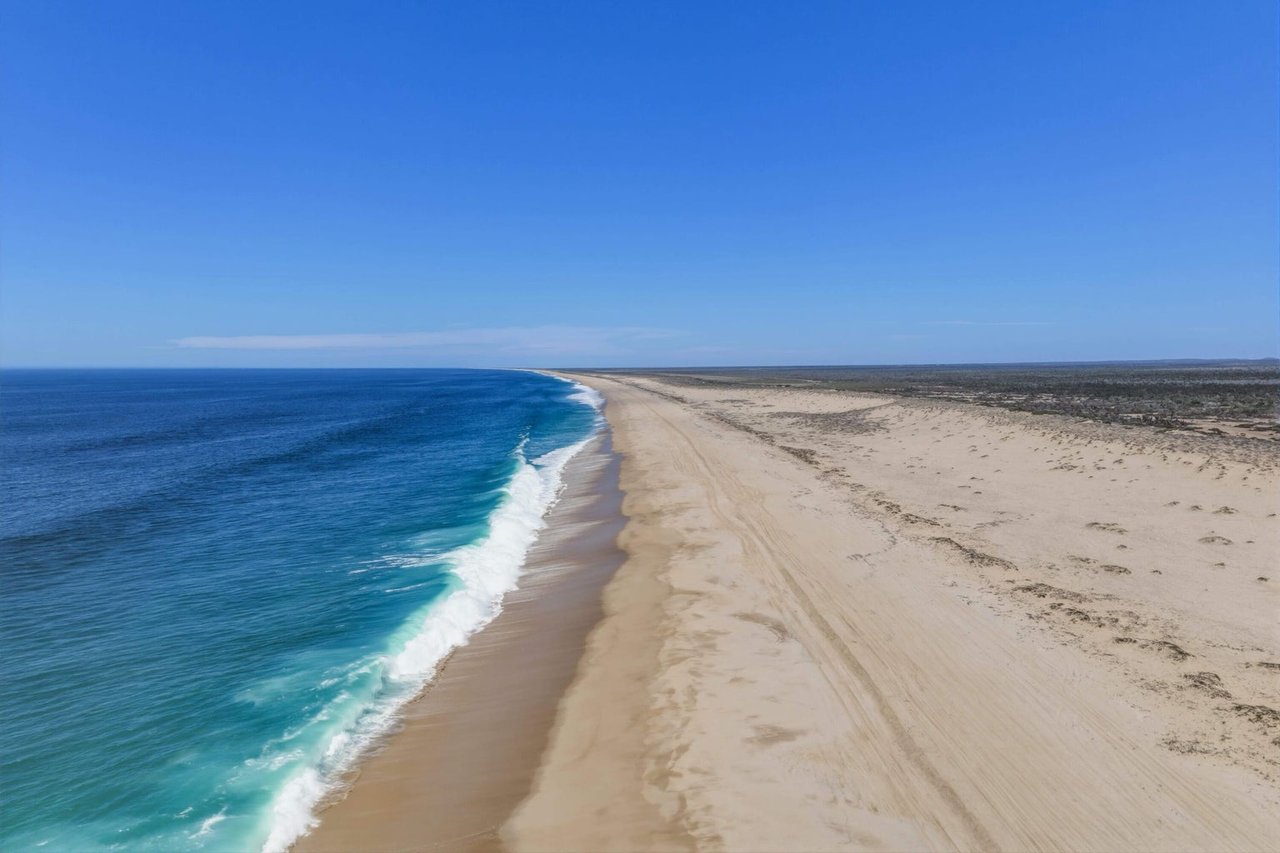
Just outside Todos Santos, Goldsmith Group Los Cabos is representing a rare 97-hectare parcel on the Pacific coast of Baja California Sur. Luz de Mar is large enough to bring any of the concepts above to life with room to spare.
Gently rolling terrain, native desert flora, panoramic views of the Sierra de la Laguna, and the Pacific coastline as your backdrop. The land has room for accommodation, dining, wellness, agriculture, and wide open natural space, without anything feeling forced or crowded.
Ninety-seven hectares this close to a thriving cultural town with a booming tourism market already in motion does not come available often. When it does, the buyers who pay attention are the ones who are glad they did.
We love walking land with prospective buyers. Get in touch with us at Goldsmith Group Los Cabos and let's set up a private visit. We think you'll understand immediately why this one is worth your time.
Stay up to date on the latest real estate trends.
August 20, 2026
August 13, 2026
August 6, 2026
July 23, 2026
July 23, 2026
July 16, 2026
July 9, 2026
July 2, 2026
June 25, 2026